
Polyvinylidene Fluoride Pvdf MarketSize, Share & Industry Analysis, 2026-2034By TypeBy ApplicationBy FormBy GradeBy Production Process
Full title & scope — all 5 axes with their segments
Polyvinylidene Fluoride Pvdf Market Size, Share & Industry Analysis, By Type (Homopolymer, Copolymer), By Application (Chemical Processing, Oil & Gas, Electrical & Electronics, Solar, Automotive, Building & Construction, Others), By Form (Pellets, Powder, Latex/Dispersion), By Grade (Industrial Grade, Architectural Coating Grade, Battery Grade), By Production Process (Suspension Polymerization, Emulsion Polymerization), and Regional Forecast, 2026-2034
How the estimates were built: data sources, modelling approach and validation steps.
- 01By TypeHomopolymer · Copolymer
- 02By ApplicationChemical Processing · Oil & Gas · Electrical & Electronics
- 03By FormPellets · Powder · Latex/Dispersion
- 04By GradeIndustrial Grade · Architectural Coating Grade · Battery Grade
- 05By Production ProcessSuspension Polymerization · Emulsion Polymerization
- 06By Region
Market Analysis & Outlook
Polyvinylidene fluoride (PVDF) is a specialty semi-crystalline fluoropolymer supplied as pellets, powder or a liquid dispersion, valued for its chemical resistance, weatherability and dielectric properties. It is used as a binder and separator coating in battery cells, a protective film in solar module backsheets, a lining and seal material in chemical processing and oil and gas equipment, and a finish for architectural coatings and wiring insulation. Buyers include battery cell and module manufacturers, solar module producers, chemical plant equipment fabricators, wire and cable makers and coatings formulators.
The global polyvinylidene fluoride pvdf market stood at USD 920 million in 2025. A forecast-period rate of 8% takes it to USD 1842 million by 2034, and the study reports every year in between, passing USD 650 million in 2020, USD 865 million in 2024, USD 995 million in 2026 and USD 1354 million in 2030.
The type mix shifts over the period. Homopolymer is the largest line in 2025 at USD 570 million, a 61.96% share, moving to USD 995 million and 54.02% by 2034. Copolymer grows fastest at 10.29%, taking its share from 38.04% to 45.98%, while Homopolymer grows slowest at 6.35%. The lines gaining share are Copolymer. Homopolymer lose share without losing revenue.
Cut by application, the largest line is Chemical Processing: 21.96% of 2025 revenue, worth USD 202 million, and 18.02% at USD 332 million by 2034. Solar grows faster at 10.42% against 5.67%, moving from 18.04% of revenue to 21.99% by 2034. Both this axis and the type one divide the same revenue, which is why they are alternative views, not components.
The regional order runs from Asia Pacific at 51.96% of 2025 revenue down to Middle East and Africa at 4.02%. Asia Pacific is worth USD 478 million in 2025 and USD 1050 million in 2034; North America, second at 20%, moves from USD 184 million to USD 332 million. Share shifts toward Asia Pacific and Latin America over the forecast period, so the regional split repays a close reading.
Behind these figures sit five regions, two type lines and five segmentation axes, each reported for every year from 2020 to 2034. The headline 2025 value is triangulated from published sources and category proxies, with no independently sourced count behind it, and the same applies to the segment, regional and country breakdowns drawn from it.
Market Size, 2020–2034
USD MillionRevenue in USD Million. Values up to 2025 are actuals; 2026–2034 are forecast.
Key Takeaways
- Revenue grows from USD 920 million in 2025 to USD 1842 million in 2034, a compound annual rate of 8%, having reached USD 865 million in 2024 from USD 650 million in 2020.
- Homopolymer is the largest type line at USD 570 million in 2025, a 61.96% share, reaching USD 995 million and 54.02% of revenue by 2034.
- Copolymer is the fastest-growing line at 10.29%, lifting its share from 38.04% in 2025 to 45.98% in 2034 and its revenue from USD 350 million to USD 847 million.
- The bull case puts 2034 revenue at USD 2100 million and the bear case at USD 1584 million, either side of the USD 1842 million base case, each with its own stated assumption in the full report.
- 51.96% of 2025 revenue is generated in Asia Pacific, worth USD 478 million and rising to USD 1050 million by 2034; Middle East and Africa is smallest at 4.02%.
- China accounts for 57.95% of Asia Pacific in the base year, worth USD 277 million in 2025 and reaching USD 609 million by 2034, the worked country example carried through that region's chapters.
- Every line on all five segmentation axes and in each of the five regions carries its own revenue, share and growth rate for all fifteen years, 2020 through 2034, on a 2025 base.
Market Trends
Revenue Share, By By Type
Base year 2025Homopolymer leads with 62.0% of by type segment revenue.
Share of by type segment revenue, most recent base year.
Read across the forecast period, the global polyvinylidene fluoride pvdf market shows movement in three places: type composition, regional weight, and the 8% rate applied to the whole.
All three are changes in mix, not in direction: nothing contracts, and the movement is in which lines and regions absorb the new revenue.
Copolymer outpaces Homopolymer. Between 2026 and 2034, 10.29% growth in Copolymer against 6.35% in Homopolymer pulls the type mix apart. By 2034 the two sit at 45.98% and 54.02% of revenue, against 38.04% and 61.96% in 2025. In absolute terms Copolymer rises from USD 350 million to USD 847 million, while Homopolymer rises from USD 570 million to USD 995 million. Both grow; the gap is wide enough to reshape the mix inside a single forecast window.
Regional weight shifts toward Asia Pacific and Latin America. Asia Pacific moves from 51.96% of revenue in 2025 to 57% in 2034, worth USD 478 million rising to USD 1050 million; Latin America moves from 5.98% of revenue in 2025 to 6.03% in 2034, worth USD 55 million rising to USD 111 million. The remaining regions grow in absolute terms while giving up share: North America at 20% moving to 18.03%, Europe at 18.04% moving to 14.98%, Middle East and Africa at 4.02% moving to 3.96%. Revenue added in this market is therefore concentrating geographically instead of spreading evenly, and a participant weighted toward a share-losing region grows more slowly than the market even while its own revenue climbs.
Fifteen years without a discontinuity. Year by year the total runs USD 650 million in 2020, USD 865 million in 2024, USD 920 million in 2025, USD 995 million in 2026, USD 1354 million in 2030 and USD 1842 million in 2034. The forecast rate of 8% sits against 7.2% over the historical period, so the projection extends an observed trend instead of proposing a new one. The risk in the number sits in the mix assumptions, not in whether the market grows at all, which is where the type and regional sections come in.
Market Growth Factors
Copolymer adds the most incremental growth
Market Drivers
3- 01Copolymer adds the most incremental growth
The fastest line on the type axis is Copolymer, at 10.29% against the market's 8%, taking USD 350 million to USD 847 million and 38.04% of revenue to 45.98%. Because the spread to Homopolymer at 6.35% is this wide, the headline 8% is a weighted result, not a rate any single line achieves. Exposure to this line, not to the market as a whole, is what determines a supplier's own rate.
- 02The two largest regions hold most of the base
The largest regional base is Asia Pacific: USD 478 million in 2025 at 51.96% of the global total, USD 1050 million by 2034 and 57%. North America is next at 20% of revenue, USD 184 million in 2025 and USD 332 million in 2034. Because both the existing revenue and the revenue added concentrate in these two, regional weighting matters more to a forecast than regional count does.
- 03The trend is already in the record
USD 650 million in 2020, USD 865 million in 2024 and USD 920 million in 2025: 7.2% compound growth before the forecast period even begins. The forecast continues at 8% to USD 1842 million in 2034. A forecast extending an observed trend is a different proposition from one proposing a turn, and that is why no ramp is applied: the 8% runs evenly across the period.
Growth drivers
| # | Growth driver | Impact | Gross contribution (Million) | 2026-28 | 2029-31 | 2032-34 |
|---|---|---|---|---|---|---|
| 1 | Lithium-ion battery electrode and separator coating demand | High | +420 | High | High | High |
| 2 | Solar photovoltaic backsheet film demand | Medium-High | +190 | Medium | High | High |
| 3 | Semiconductor and electronics manufacturing expansion | Medium | +140 | Medium | Medium | Medium |
| 4 | Corrosion-resistant linings for oil and gas exploration | Medium | +90 | Medium | Low | Low |
| 5 | Water treatment membrane capacity additions | Medium | +70 | Low | Medium | Medium |
| 6 | Others | Low | +162 | Low | Low | Low |
| Total | +1072 | |||||
Restraints
| # | Restraint | Impact | Estimated reduction (Million) | 2026-28 | 2029-31 | 2032-34 |
|---|---|---|---|---|---|---|
| 1 | Vinylidene fluoride monomer and fluorspar feedstock price volatility | Medium-High | −90 | High | Medium | Medium |
| 2 | PFAS regulatory scrutiny affecting fluoropolymer approvals | Medium | −60 | Low | Medium | High |
| Total | −150 | |||||
Drivers contribute 1072 Million and restraints remove 150 Million, a net 922 Million, which is the revenue the market adds between the base year and 2034. Contributions are CDI estimates, apportioned so that they reconcile with the forecast rather than being read from it.
Separate the 8% into its parts and three show up: an already-large base compounding, the type mix moving toward its faster lines, and regional growth landing unevenly.
Restraining Factors
Downside case: USD 1584 million by 2034, against USD 1842 million in the base case
Market Restraints
2- 01Downside case: USD 1584 million by 2034, against USD 1842 million in the base case
Bear case assumes battery and solar capacity additions slip behind schedule and PFAS registration requirements tighten enough to slow new fluoropolymer plant approvals. On that assumption 2034 revenue lands at USD 1584 million against the USD 1842 million base case, from the same USD 920 million 2025 starting point.
- 02Homopolymer grows below the market rate
With 61.96% of 2025 revenue (USD 570 million) Homopolymer is where most of the market sits, and it grows at only 6.35% against the market's 8%. Revenue still reaches USD 995 million by 2034 and share still falls to 54.02%: a drag on the average, not a decline.
Market Opportunities
Upside case: USD 2100 million by 2034
Market Opportunities
2- 01Upside case: USD 2100 million by 2034
What would beat the forecast: bull case assumes battery gigafactory capacity additions and solar module installations proceed on or ahead of announced schedules with no new PFAS-driven restriction on fluoropolymer processing. That case reaches USD 2100 million in 2034 against USD 1842 million, and it is worth testing against a reader's own read of the market.
- 02The opening is on the type axis, not the regional one
Copolymer grows at 10.29% against 8% for the market, adding revenue from USD 350 million in 2025 to USD 847 million in 2034 and taking its share from 38.04% to 45.98%. It is the place on this axis where share changes hands at scale, so it is where an entrant can take position without displacing the incumbent in Homopolymer.
Market Challenges
The total depends on a single line
Market Challenges
2- 01The total depends on a single line
Homopolymer is 61.96% of 2025 revenue at USD 570 million and still 54.02% at USD 995 million in 2034. A market leaning this heavily on one type line concentrates its exposure there, and a shift in demand for that line moves the total more than any other single change on the axis.
- 02China is 57.95% of Asia Pacific
China generates USD 277 million of Asia Pacific's USD 478 million in 2025, 57.95% of the region, reaching USD 609 million by 2034. Read as a region it looks diversified; read by weight it is not, and the regional forecast inherits whatever happens in that one market.
Segmentation Analysis
5 axesThe global polyvinylidene fluoride pvdf market is cut five ways: by type, application, form, grade and production process. Revenue does not add across them: each is a different cut of the same total.
Two type lines are reported. One of them takes share over the forecast period and the other gives it up, though every line grows in absolute terms between 2025 and 2034.
By Type · 2 segments
Homopolymer Led by Type in 2025, with Copolymer Growing Fastest
- Largest Homopolymer · 62%
- Fastest Copolymer · 10.3%
- Moves most Homopolymer · -7.9 pts
- Order by 2034 unchanged
| Segment | 2025 | Share | 2034 | Share | CAGR |
|---|---|---|---|---|---|
| Homopolymer | $570M | 62% | $995M | 54%-7.9 | 6.3% |
| Copolymer | $350M | 38% | $847M | 46%+7.9 | 10.3% |
Homopolymer grades lead because coatings, chemical processing equipment linings and general extrusion applications have relied on them for decades and switching costs for approved formulations are high. Copolymer grades are growing faster as battery electrode and separator binder demand favors their improved flexibility and adhesion, and qualification cycles for new battery chemistries are pulling additional volume toward copolymer variants. The fastest line is Copolymer, which is why the split shifts toward it over the period. The order does not change: Homopolymer is still largest in 2034, and what moves is how much it holds. Every year of the series is priced on this axis, making it the reference cut for the rest of the report.
By Application · 7 segments
By Application
- Largest Chemical Processing · 22%
- Fastest Solar · 10.4%
- Moves most Electrical & Electronics · +4 pts
- Order by 2034 changes
| Segment | 2025 | Share | 2034 | Share | CAGR |
|---|---|---|---|---|---|
| Chemical Processing | $202M | 22% | $332M | 18%-3.9 | 5.7% |
| Oil & Gas | $110M | 12% | $166M | 9%-3 | 4.7% |
| Electrical & Electronics | $184M | 20% | $442M | 24%+4 | 10.2% |
| Solar | $166M | 18% | $405M | 22%+3.9 | 10.4% |
| Automotive | $110M | 12% | $239M | 13%+1 | 9% |
| Building & Construction | $92M | 10% | $166M | 9%-1 | 6.8% |
| Others | $56M | 6.1% | $92M | 5%-1.1 | 5.7% |
2025 to 2034 revenue and share by line: Chemical Processing USD 202 million to USD 332 million (21.96% to 18.02%), Electrical & Electronics USD 184 million to USD 442 million (20% to 24%), Solar USD 166 million to USD 405 million (18.04% to 21.99%), Oil & Gas USD 110 million to USD 166 million (11.96% to 9.01%), Automotive USD 110 million to USD 239 million (11.96% to 12.97%), Building & Construction USD 92 million to USD 166 million (10% to 9.01%), Others USD 56 million to USD 92 million (6.09% to 4.99%). Solar Outpaces the Axis While Chemical Processing Holds the Largest Share Electrical and electronics leads consumption because PVDF's dielectric stability and chemical resistance make it the preferred binder and separator coating material for lithium-ion cells, a use case that has scaled with battery manufacturing capacity. Solar is the fastest grower as backsheet films protecting photovoltaic modules from ultraviolet degradation and moisture ingress track new installed capacity, expanding across every major region. By 2034 the largest line is Electrical & Electronics and no longer Chemical Processing, the one axis here where the order actually changes.
By Form · 3 segments
Pellets Held the Dominant Share of the Form Segment in 2025
- Largest Pellets · 40%
- Fastest Latex/Dispersion · 11.4%
- Moves most Latex/Dispersion · +8.9 pts
- Order by 2034 changes
| Segment | 2025 | Share | 2034 | Share | CAGR |
|---|---|---|---|---|---|
| Pellets | $368M | 40% | $645M | 35%-5 | 6.4% |
| Powder | $294M | 32% | $516M | 28%-3.9 | 6.5% |
| Latex/Dispersion | $258M | 28% | $681M | 37%+8.9 | 11.4% |
Pellets remain the largest form because extrusion into pipe, wire and cable jacketing and film draws on established processing lines that most fabricators already operate. Latex and dispersion grades are growing fastest as battery electrode coating and membrane casting processes are formulated around liquid feedstock, and producers have added dispersion capacity specifically to serve that shift. By 2034 the largest line is Latex/Dispersion and no longer Pellets, the one axis here where the order actually changes.
By Grade · 3 segments
Scale in Industrial Grade and Growth in Battery Grade Define the Grade Axis
- Largest Industrial Grade · 45%
- Fastest Battery Grade · 13.8%
- Moves most Battery Grade · +15 pts
- Order by 2034 changes
| Segment | 2025 | Share | 2034 | Share | CAGR |
|---|---|---|---|---|---|
| Industrial Grade | $414M | 45% | $663M | 36%-9 | 5.4% |
| Architectural Coating Grade | $276M | 30% | $442M | 24%-6 | 5.4% |
| Battery Grade | $230M | 25% | $737M | 40%+15 | 13.8% |
Industrial grade leads because chemical processing equipment linings, seals and general engineering parts have used PVDF for decades under long qualification cycles that favor incumbent suppliers. Battery grade is growing fastest as lithium-ion cell manufacturers scale electrode and separator coating lines, and new gigafactory capacity coming online continues to add qualified demand for that grade specifically. By 2034 the largest line is Battery Grade and no longer Industrial Grade, the one axis here where the order actually changes.
By Production Process · 2 segments
Suspension Polymerization Held the Dominant Share of the Production process Segment in 2025
- Largest Suspension Polymerization · 58%
- Fastest Emulsion Polymerization · 9.6%
- Moves most Suspension Polymerization · -6 pts
- Order by 2034 unchanged
| Segment | 2025 | Share | 2034 | Share | CAGR |
|---|---|---|---|---|---|
| Suspension Polymerization | $534M | 58% | $958M | 52%-6 | 6.7% |
| Emulsion Polymerization | $386M | 42% | $884M | 48%+6 | 9.6% |
Suspension polymerization leads because it is the lower-cost route for general-purpose resin used across chemical processing and construction applications, and most installed capacity is built around it. Emulsion polymerization is growing faster as it yields the finer, more uniform particle dispersions that battery electrode coating and membrane casting formulations require, pulling incremental investment toward that route. Emulsion Polymerization outgrows every other line on this axis, narrowing the gap to Suspension Polymerization. The order does not change: Suspension Polymerization is still largest in 2034, and what moves is how much it holds.
Regional Insights
Regional Revenue Share
Base year 2025Share of global revenue in the base year.
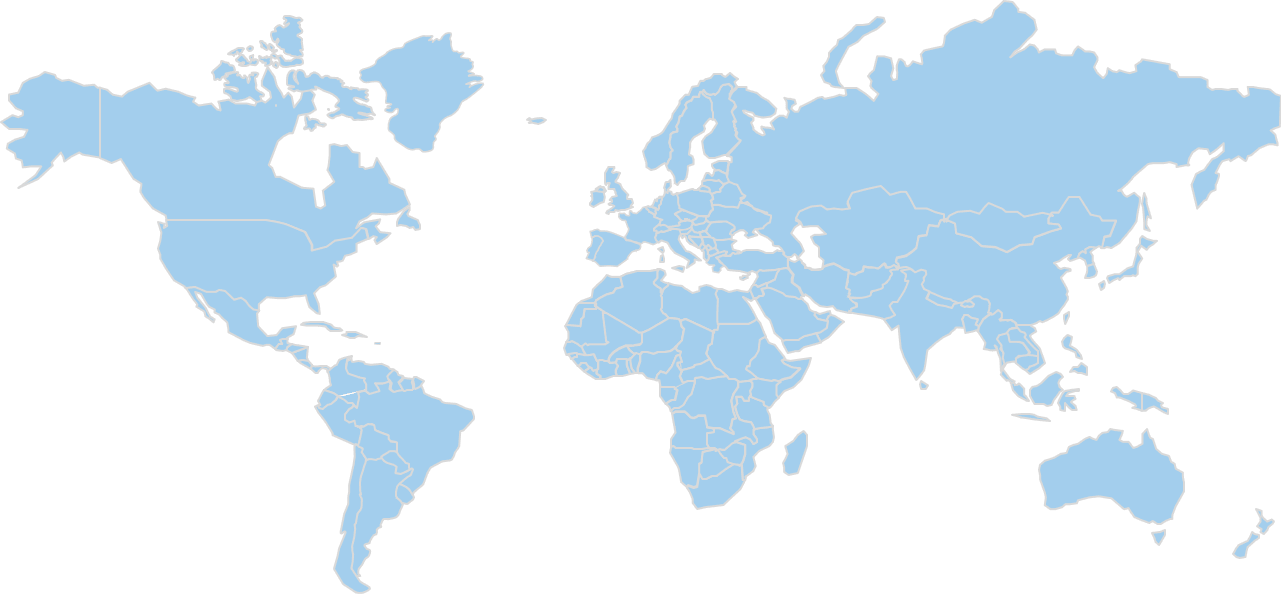
Only the leading region's share is published outside the report; pins mark the region, not a specific country.
Asia Pacific Market Analysis
The largest region covered, and the one gaining the most — it picks up 5 points of share by 2034, while revenue still grows 2.2×.
- Rank 1 of 5
- 2025 share 52%
- By 2034 57%
- Revenue $478M → $1050M
Asia Pacific holds 51.96% of the global polyvinylidene fluoride pvdf market in 2025, worth USD 478 million on the way to USD 1050 million by 2034. It is a dominant region on this axis, first by revenue throughout the period.
57% of global revenue sits here by 2034, up from the 2025 level, at a pace above the 8% global rate, so this region warrants separate treatment and should not be scaled off the total.
Segment composition follows the global pattern: Homopolymer largest at 61.96% of 2025 revenue, Copolymer fastest at 10.29%. Per-axis and per-country detail for Asia Pacific sits in the full report.
China
The largest market in Asia Pacific, growing 2.2×.
- In region 1 of 3
- Of region 58%
- Of global 30.1%
- Revenue $277M → $609M
USD 277 million of Asia Pacific's 2025 revenue is generated in China, the region's largest market, reaching USD 609 million by 2034. It accounts for 57.95% of regional revenue in the base year, the largest single share without dominating the region outright. Against regional totals of USD 478 million in 2025 and USD 1050 million in 2034, it is the country the full report breaks out in detail.
China buys along the same lines as the market globally; Homopolymer first at 61.96% of 2025 revenue and 54.02% in 2034, Copolymer fastest at 10.29% on a share moving from 38.04% to 45.98%. With 57.95% of Asia Pacific concentrated here, a change in this country's mix is visible in the regional figures instead of being diluted by its neighbours. Revenue by type for China is reported separately in the full report.
PVDF resin and compounded products entering the Chinese market fall under the Ministry of Ecology and Environment's new chemical substance registration regime, administered through the domestic chemical inventory system, so a supplier introducing a new PVDF grade must file notification before commercial use. Where the resin is processed into cable and wire insulation, compliance follows national GB standards set by the Standardization Administration of China, covering flame resistance and electrical performance. Building-related applications, such as architectural coatings and membrane cladding, are additionally reviewed against fire-safety codes administered by the Ministry of Housing and Urban-Rural Development. Suppliers into food-contact or medical tubing uses face separate clearance from the National Medical Products Administration before the material can be marketed for those specific end uses.
In China the field is Arkema, Daikin Industries Ltd., Dyneon GmbH, Shanghai Ofluorine Chemical Technology Co. Ltd., Shanghai 3F New Materials Company Limited, Solvay S.A., Zhuzhou Hongda Polymer Materials Co. Ltd., Zhejiang Fotech International Co. Ltd., Kureha Corporation and Quadrant Engineering Plastics Products Inc.. Two different problems sit on the same axis: holding Homopolymer at 61.96% of 2025 revenue, and taking Copolymer while it grows at 10.29%. Country-level shares and positioning per company sit in the full report.
Japan
2nd-largest in Asia Pacific, growing 2.2×.
- In region 2 of 3
- Of region 24.1%
- Of global 12.5%
- Revenue $115M → $252M
Within Asia Pacific, Japan accounts for 24.06% of regional revenue and 12.5% of the global total, worth USD 115 million in 2025 and USD 252 million by 2034.
South Korea
3rd-largest in Asia Pacific, growing 2.2×.
- In region 3 of 3
- Of region 10%
- Of global 5.2%
- Revenue $48M → $105M
Within Asia Pacific, South Korea accounts for 10.04% of regional revenue and 5.22% of the global total, worth USD 48 million in 2025 and USD 105 million by 2034.
North America Market Analysis
The 2nd-largest region covered — 2 points of share move elsewhere by 2034, while revenue still grows 1.8×.
- Rank 2 of 5
- 2025 share 20%
- By 2034 18%
- Revenue $184M → $332M
USD 184 million of 2025 revenue is generated in North America, 20% of the global polyvinylidene fluoride pvdf market on the way to USD 332 million by 2034. By revenue it sits second across the study, and the ranking does not change between 2025 and 2034.
Its share moves to 18.03% by 2034, a shift in share, not in direction: revenue climbs every year while the market's centre of gravity moves elsewhere.
The type mix reported at global level applies here, with Homopolymer the largest line at 61.96% of 2025 revenue and Copolymer the fastest-growing at 10.29%. The full report breaks North America out along every axis and by country.
United States
Sets the pace for North America at 84.8% of it, growing 1.8×.
- In region 1 of 2
- Of region 84.8%
- Of global 17%
- Revenue $156M → $282M
84.78% of North America's base-year revenue comes from the United States; USD 156 million, rising to USD 282 million by 2034. Carrying 84.78% of the region in the base year, it sets North America's direction instead of merely contributing to it. Regional revenue of USD 184 million in 2025 and USD 332 million in 2034 sits around it, and it is the country used wherever the full report cuts a figure by geography.
Composition here matches the global split: the largest line is Homopolymer at 61.96% of 2025 revenue, easing to 54.02% by 2034, and the fastest is Copolymer at 10.29%, from 38.04% to 45.98%. Its 84.78% weight in North America means those movements carry straight into the regional totals. Revenue by type for the United States is reported separately in the full report.
In the United States, PVDF as an industrial polymer is captured under the Environmental Protection Agency's Toxic Substances Control Act inventory, so a manufacturer or importer must ensure the resin is listed, or file a premanufacture notice if it is a new substance. Electrical and cable applications rely on Underwriters Laboratories listing and National Fire Protection Association standards to certify flame and smoke performance. Where the polymer contacts food or potable water, the Food and Drug Administration's indirect food additive provisions and NSF International standards govern approval for that specific use. No separate national registration applies purely on the basis of chemical composition; obligations attach instead to the intended application.
In the United States the field is Arkema, Daikin Industries Ltd., Dyneon GmbH, Shanghai Ofluorine Chemical Technology Co. Ltd., Shanghai 3F New Materials Company Limited, Solvay S.A., Zhuzhou Hongda Polymer Materials Co. Ltd., Zhejiang Fotech International Co. Ltd., Kureha Corporation and Quadrant Engineering Plastics Products Inc.. Homopolymer, at 61.96% of 2025 revenue, is where the volume sits, and Copolymer, growing at 10.29%, is where position changes hands over the forecast period. That makes North America a 20% share of 2025 global revenue, USD 184 million rising to USD 332 million, for any supplier deciding where to concentrate.
Canada
2nd-largest in North America, growing 1.8×.
- In region 2 of 2
- Of region 12%
- Of global 2.4%
- Revenue $22M → $40M
Within North America, Canada accounts for 11.96% of regional revenue and 2.39% of the global total, worth USD 22 million in 2025 and USD 40 million by 2034.
Europe Market Analysis
The 3rd-largest region covered — 3.1 points of share move elsewhere by 2034, while revenue still grows 1.7×.
- Rank 3 of 5
- 2025 share 18%
- By 2034 15%
- Revenue $166M → $276M
In Europe, 18.04% of global revenue puts 2025 at USD 166 million rising to USD 276 million in 2034. Among the five regions it ranks third by revenue in both years.
By 2034 the share stands at 14.98%, and the region keeps growing in absolute terms while others expand faster, a change in relative weight, not a decline in demand.
Homopolymer leads here as it does globally, at 61.96% of 2025 revenue, and Copolymer again grows fastest at 10.29%. Per-axis and per-country detail for Europe sits in the full report.
Germany
The largest market in Europe, growing 1.7×.
- In region 1 of 2
- Of region 31.9%
- Of global 5.8%
- Revenue $53M → $88M
The largest single market in Europe is Germany, at USD 53 million in 2025 and USD 88 million in 2034. Its 31.93% of base-year regional revenue leads the region, though enough sits elsewhere that Europe is not a proxy for it. Regional revenue of USD 166 million in 2025 and USD 276 million in 2034 sits around it, and it is the country used wherever the full report cuts a figure by geography.
Germany buys along the same lines as the market globally; Homopolymer first at 61.96% of 2025 revenue and 54.02% in 2034, Copolymer fastest at 10.29% on a share moving from 38.04% to 45.98%. Since 31.93% of Europe's revenue is generated here, the regional numbers inherit this market's mix instead of smoothing it out. The full report reports Germany by type separately.
As a member state of the European Union, Germany applies the REACH regulation administered by the European Chemicals Agency, requiring any manufacturer or importer of PVDF to register the substance and disclose its safety profile before it can be placed on the market. Downstream uses in construction, such as cladding membranes or roofing systems, require CE marking under the Construction Products Regulation, attesting to fire and mechanical performance. Where the polymer is used in pipework or fittings carrying drinking water, German DVGW certification additionally applies, verifying suitability for potable water contact. Cable and wire grades must meet the relevant DIN and VDE standards for insulation performance before sale.
The suppliers tracked in this study (Arkema, Daikin Industries Ltd., Dyneon GmbH, Shanghai Ofluorine Chemical Technology Co. Ltd., Shanghai 3F New Materials Company Limited, Solvay S.A., Zhuzhou Hongda Polymer Materials Co. Ltd., Zhejiang Fotech International Co. Ltd., Kureha Corporation and Quadrant Engineering Plastics Products Inc.) compete in Germany across the type lines above. The commercially relevant division is 61.96% of 2025 revenue in Homopolymer, where the volume is, against 10.29% growth in Copolymer, where share moves. A supplier weighted toward Europe is competing over a base of USD 166 million in 2025 reaching USD 276 million by 2034, 18.04% of global revenue at the start of that period.
France
2nd-largest in Europe, growing 1.6×.
- In region 2 of 2
- Of region 22.3%
- Of global 4%
- Revenue $37M → $61M
Within Europe, France accounts for 22.29% of regional revenue and 4.02% of the global total, worth USD 37 million in 2025 and USD 61 million by 2034.
Latin America Market Analysis
The 4th-largest region covered, holding its share flat through 2034, while revenue still grows 2.0×.
- Rank 4 of 5
- 2025 share 6%
- By 2034 6%
- Revenue $55M → $111M
5.98% of the global polyvinylidene fluoride pvdf market sits in Latin America in 2025, worth USD 55 million with USD 111 million projected for 2034. By revenue it sits fourth across the study, and the ranking does not change between 2025 and 2034.
Share climbs to 6.03% by 2034, because it outgrows the market's 8%; the revenue added here is disproportionate to where the region started.
Within the region the type split tracks the global one; 61.96% of 2025 revenue in Homopolymer, fastest growth of 10.29% in Copolymer. Latin America is reported axis by axis and country by country in the full study.
Brazil
The largest market in Latin America, growing 2.0×.
- In region 1 of 2
- Of region 54.5%
- Of global 3.3%
- Revenue $30M → $61M
Brazil is the largest market within Latin America, generating USD 30 million in 2025 and projected to reach USD 61 million by 2034. It accounts for 54.55% of regional revenue in the base year, the largest single share without dominating the region outright. Against regional totals of USD 55 million in 2025 and USD 111 million in 2034, it is the country the full report breaks out in detail.
Composition here matches the global split: the largest line is Homopolymer at 61.96% of 2025 revenue, easing to 54.02% by 2034, and the fastest is Copolymer at 10.29%, from 38.04% to 45.98%. Because the country carries 54.55% of Latin America, a movement in its own mix shows up in the regional totals instead of being averaged away by neighbouring markets. The full report reports Brazil by type separately.
Brazilian oversight of PVDF is organized by end use, not by the polymer itself. Industrial chemical import and manufacture fall within the environmental licensing and reporting framework overseen by IBAMA, while INMETRO administers compulsory conformity certification for a range of manufactured goods, including certain plastic components used in construction and electrical installations, tested against ABNT technical standards. Material intended for contact with food or beverages additionally requires clearance from ANVISA under its food-contact material resolutions before it can be supplied for that purpose. A supplier bringing PVDF-based products into Brazil should expect certification requirements to track the finished application, not a single blanket approval covering the resin generically.
The suppliers tracked in this study (Arkema, Daikin Industries Ltd., Dyneon GmbH, Shanghai Ofluorine Chemical Technology Co. Ltd., Shanghai 3F New Materials Company Limited, Solvay S.A., Zhuzhou Hongda Polymer Materials Co. Ltd., Zhejiang Fotech International Co. Ltd., Kureha Corporation and Quadrant Engineering Plastics Products Inc.) compete in Brazil across the type lines above. Volume sits in Homopolymer at 61.96% of 2025 revenue; movement sits in Copolymer at 10.29% growth. The commercial size of that position is USD 55 million in 2025 and USD 111 million by 2034, 5.98% of the global total in the base year.
Mexico
2nd-largest in Latin America, growing 2.0×.
- In region 2 of 2
- Of region 25.4%
- Of global 1.5%
- Revenue $14M → $28M
1.52% of global revenue is generated in Mexico; USD 14 million in 2025, reaching USD 28 million in 2034, and 25.45% of Latin America.
Middle East and Africa Market Analysis
The 5th-largest region covered — 0.1 points of share move elsewhere by 2034, while revenue still grows 2.0×.
- Rank 5 of 5
- 2025 share 4%
- By 2034 4%
- Revenue $37M → $73M
Middle East and Africa holds 4.02% of the global polyvinylidene fluoride pvdf market in 2025, worth USD 37 million and reaches USD 73 million by 2034. It is a marginal region on this axis, fifth by revenue throughout the period.
3.96% of global revenue sits here in 2034, below the 2025 level, while nothing contracts here; other regions simply grow faster, which shows up as relative weight, not as falling revenue.
Segment composition follows the global pattern: Homopolymer largest at 61.96% of 2025 revenue, Copolymer fastest at 10.29%. Middle East and Africa is reported axis by axis and country by country in the full study.
Saudi Arabia
The largest market in Middle East and Africa, growing 1.9×.
- In region 1 of 2
- Of region 40.5%
- Of global 1.6%
- Revenue $15M → $29M
The largest single market in Middle East and Africa is Saudi Arabia, at USD 15 million in 2025 and USD 29 million in 2034. Its 40.54% of base-year regional revenue leads the region, though enough sits elsewhere that Middle East and Africa is not a proxy for it. The region itself runs USD 37 million to USD 73 million over the same period, and this is the market carrying the country-level detail in the full report.
Composition here matches the global split: the largest line is Homopolymer at 61.96% of 2025 revenue, easing to 54.02% by 2034, and the fastest is Copolymer at 10.29%, from 38.04% to 45.98%. Since 40.54% of Middle East and Africa's revenue is generated here, the regional numbers inherit this market's mix instead of smoothing it out. Revenue by type for Saudi Arabia is reported separately in the full report.
In Saudi Arabia, product conformity for PVDF-based goods is governed by the Saudi Standards, Metrology and Quality Organization, which requires certification through its SABER conformity assessment platform before many manufactured or imported items can clear customs. Technical regulations set performance and safety requirements according to the product's end use, covering areas such as pipe and fitting systems, cable insulation, and building cladding materials. Construction-related applications are further assessed against the Saudi Building Code for fire and structural performance. A supplier must register the product and its technical file on the SABER system, obtain the applicable certificate, and ensure labelling meets SASO's marking requirements before the goods reach the Saudi market.
Competition in Saudi Arabia runs between the suppliers this study tracks: Arkema, Daikin Industries Ltd., Dyneon GmbH, Shanghai Ofluorine Chemical Technology Co. Ltd., Shanghai 3F New Materials Company Limited, Solvay S.A., Zhuzhou Hongda Polymer Materials Co. Ltd., Zhejiang Fotech International Co. Ltd., Kureha Corporation and Quadrant Engineering Plastics Products Inc.. Volume sits in Homopolymer at 61.96% of 2025 revenue; movement sits in Copolymer at 10.29% growth. A supplier weighted toward Middle East and Africa is competing over a base of USD 37 million in 2025 reaching USD 73 million by 2034, 4.02% of global revenue at the start of that period.
South Africa
2nd-largest in Middle East and Africa, growing 2.1×.
- In region 2 of 2
- Of region 18.9%
- Of global 0.8%
- Revenue $7M → $15M
0.76% of global revenue is generated in South Africa; USD 7 million in 2025, reaching USD 15 million in 2034, and 18.92% of Middle East and Africa.
Request this sample to see the full data tables and segment-level detail behind this analysis.
Report Coverage
This report assesses the market across every segment, with revenue and a growth rate for each line in each year of the study period. It covers the drivers, trends, opportunities, restraints and challenges shaping growth, the competitive landscape and the companies profiled, and the research methodology behind every estimate. Segmentation is reported by Type, Application, Form, Grade, Production Process, and regional analysis covers Asia Pacific, North America, Europe, Latin America, Middle East and Africa, each broken out by country.
Competitive Landscape
Position on the Type Axis Decides Competitive Standing
The field covered here is Arkema, Daikin Industries Ltd., Dyneon GmbH, Shanghai Ofluorine Chemical Technology Co. Ltd., Shanghai 3F New Materials Company Limited, Solvay S.A., Zhuzhou Hongda Polymer Materials Co. Ltd., Zhejiang Fotech International Co. Ltd., Kureha Corporation and Quadrant Engineering Plastics Products Inc..
Competition follows the type split, not the regional one. Volume sits in Homopolymer, USD 570 million and 61.96% of 2025 revenue, 54.02% by 2034, which is also where an incumbent is hardest to dislodge. Copolymer, compounding at 10.29% against 6.35% for Homopolymer, is where share changes hands over the forecast period. Holding the first and taking the second are separate capabilities, which is why a market of USD 920 million supports as many suppliers as it does.
Scale in vinylidene fluoride monomer and fluorspar feedstock separates the largest suppliers from the rest, since backward integration protects margin when feedstock prices move. Regulatory experience matters as PFAS policy tightens registration and reporting requirements across major markets, and established producers with existing approvals hold an edge over new entrants. Breadth across battery, industrial and coating grades lets larger players serve multiple end markets from one plant network. Regional Chinese producers compete primarily on cost and proximity to domestic battery and solar manufacturing capacity, with grade breadth playing a smaller part in their positioning.
Geographic reach is the other axis of competition. Asia Pacific alone accounts for 51.96% of 2025 revenue, so a supplier absent there is absent from the largest part of the market whatever its position elsewhere; North America adds a further 20%.
Company-level profiles, financials, shares and development histories are held in the full report and not in this summary.
List of Key Polyvinylidene Fluoride Pvdf Companies Profiled
10 companies profiled. Company profiles, including financials, product portfolios and recent developments, are part of the full report.
- Arkema(France)
- Daikin Industries Ltd.(Japan)
- Dyneon GmbH(Germany)
- Shanghai Ofluorine Chemical Technology Co. Ltd.(China)
- Shanghai 3F New Materials Company Limited(China)
- Solvay S.A.(Belgium)
- Zhuzhou Hongda Polymer Materials Co. Ltd.(China)
- Zhejiang Fotech International Co. Ltd.(China)
- Kureha Corporation(Japan)
- Quadrant Engineering Plastics Products Inc.
Geographic Coverage
Every market below is broken out separately in the report.
Asia Pacific
12North America
3Europe
8Latin America
3Middle East and Africa
4Key Insights
Report Scope
Study parameters & segmentationThis study covers market size and forecasts over the 2020–2034 period, segmentation across 5 axes (Type, Application, Form, Grade, Production Process), regional analysis for 5 regions and their constituent countries, a competitive landscape profiling 10 key companies, and the research methodology behind every estimate.
Segmentation
5 axes + regionFull chapter-and-section structure of the report. Segment, region, and company breakdowns are listed as scope. The underlying figures are in the sample and full report.
Table of Contents+−
Chapter 1.Executive Summary
Chapter 2.Premium Insights
Chapter 3.Market Definition
Chapter 4.Research Methodology
Chapter 5.Strategic Imperatives & Market Outlook
Chapter 6.Go-to-Market (GTM) Strategies
Chapter 7.Market Trends, Strategy & Dynamics
Chapter 8.Porter's Five Forces
Chapter 9.PESTEL Analysis
Chapter 10.Value Chain Analysis
Chapter 11.Supply Chain Analysis
Chapter 12.Macro-Economic Factors
Chapter 13.Market Cost Analysis
Chapter 14.Market Supply-Side Analysis
Chapter 15.Global Polyvinylidene Fluoride Pvdf Market Size & Projections, 2020–2034, Revenue (USD Million)
Chapter 16.Global Polyvinylidene Fluoride Pvdf Market Overview, By Type, 2020–2034, Revenue (USD Million)
Chapter 17.Global Polyvinylidene Fluoride Pvdf Market Overview, By Application, 2020–2034, Revenue (USD Million)
Chapter 18.Global Polyvinylidene Fluoride Pvdf Market Overview, By Form, 2020–2034, Revenue (USD Million)
Chapter 19.Global Polyvinylidene Fluoride Pvdf Market Overview, By Grade, 2020–2034, Revenue (USD Million)
Chapter 20.Global Polyvinylidene Fluoride Pvdf Market Overview, By Production Process, 2020–2034, Revenue (USD Million)
Chapter 21.Global Polyvinylidene Fluoride Pvdf Market Size — Segment Comparison
Chapter 22.Global Polyvinylidene Fluoride Pvdf Geography Overview, 2020–2034, Revenue (USD Million)
Chapter 23.Asia Pacific Polyvinylidene Fluoride Pvdf Market Deep-Dive, 2020–2034, Revenue (USD Million)
Chapter 24.North America Polyvinylidene Fluoride Pvdf Market Deep-Dive, 2020–2034, Revenue (USD Million)
Chapter 25.Europe Polyvinylidene Fluoride Pvdf Market Deep-Dive, 2020–2034, Revenue (USD Million)
Chapter 26.Latin America Polyvinylidene Fluoride Pvdf Market Deep-Dive, 2020–2034, Revenue (USD Million)
Chapter 27.Middle East and Africa Polyvinylidene Fluoride Pvdf Market Deep-Dive, 2020–2034, Revenue (USD Million)
Chapter 28.Application / Use-Case Analysis
Chapter 29.Vendor Capability Scorecard
Chapter 30.Scenario Forecasts
Chapter 31.Top 10 Key Clients of Top 10 Players
Chapter 32.Top 10 Suppliers
Chapter 33.Competitive Landscape
Chapter 34.Partnerships & M&A
Chapter 35.Key Vendor Analysis
Chapter 36.Marketing Strategy Analysis, Distributors & Traders
Chapter 37.Outlook of the Market
Chapter 38.Concluding Analyst Note
List of Figures+−
Structural index generated from this report's own section headings, not verified against the delivered report's actual figure numbering.
List of Tables+−
Structural index generated from this report's own section headings, not verified against the delivered report's actual table numbering.
Segmentation Analysis
5 axesBy Type
2- 01Homopolymer
- 02Copolymer
By Application
7- 01Chemical Processing
- 02Oil & Gas
- 03Electrical & Electronics
- 04Solar
- 05Automotive
- 06Building & Construction
- 07Others
By Form
3- 01Pellets
- 02Powder
- 03Latex/Dispersion
By Grade
3- 01Industrial Grade
- 02Architectural Coating Grade
- 03Battery Grade
By Production Process
2- 01Suspension Polymerization
- 02Emulsion Polymerization
Segment categories shown for scope reference. See the Summary tab for revenue share by By Type. Full segment-by-segment detail across every axis is available in the sample and full report.
Research approach
A market size is a claim about the world, and a claim is only as good as the route to it. Every study is built upward from units and prices — what is actually produced, sold or performed, at what it actually changes hands for — rather than from a headline figure divided downwards. Disclosed company revenue is then used to check that build, not to produce it.
Sizing starts from PVDF production and shipment volumes across each application, built up from tonnage estimates for chemical processing, oil and gas, electrical and electronics, solar backsheet, automotive and building and construction uses, and average realized prices for each grade: battery, industrial and architectural coating. Multiplying volume by price for every application and grade produces the bottom-up revenue figure for each year. That build is then checked against the fluoropolymer segment revenue disclosed by Arkema, Solvay, Daikin Industries and Kureha Corporation in their public filings. Where the bottom-up figure and the disclosed segment revenue diverge, the volume or price assumption feeding the bottom-up build is corrected, since the disclosed figure includes fluoropolymers beyond PVDF and cannot be substituted directly.
The four stages
The same sequence runs behind every published study, whatever the industry. The order matters as much as the steps: the segment axes are fixed before any number is collected, so the model is never reshaped to fit whatever data happens to turn up.
What the build rests on, and what checks it
The two are not interchangeable. The left column produces the number; the right column tests it. When the check disagrees with the build, the answer is to find which bottom-up assumption is wrong — a unit count, a price, a take-up rate — not to split the difference between them.
- Volume actually transacted — units produced, installed, dispensed or procedures performed, counted at the level each is genuinely recorded
- Realised pricing by tier and channel, rather than one blended average applied across the whole market
- Take-up and frequency: how much of the addressable base buys, and how often it repeats
- Disclosed revenue of the companies serving the market, where filings separate it far enough to be usable
- Buyer-side spending totals — capital budgets, procurement lines, or the output of the end market the product is bought against
- Trade and customs flows, where the product crosses borders in a separately recorded form
Data sources
Published data establishes what happened. Only the people transacting in a market can say why, and what is about to change — so the two are collected separately and weighted differently.
- Commercial and product leadership at the companies that supply the market
- Procurement and specification leads at the organisations that buy it
- Distributors, integrators and channel partners, where the market is served indirectly
- Regulatory and standards specialists, where approval governs what can be sold at all
- Company filings, annual reports and investor disclosure
- Government statistics, customs records and regulatory registers
- Trade association output and standards-body publications
- Technical and peer-reviewed literature, where the market rests on a clinical or engineering claim
Interviews target procurement and technical managers at battery electrode and separator coating plants, solar backsheet film converters, and chemical processing equipment fabricators who specify PVDF grade and volume directly. Additional conversations cover fluoropolymer resin distributors who see order patterns across smaller buyers, and regulatory affairs contacts tracking how PFAS policy affects fluoropolymer registration and import approval in the European Union and United States. Sampling emphasizes China, Japan and South Korea, where battery and solar manufacturing capacity is concentrated and most incremental PVDF demand originates, alongside the United States and Germany, where industrial and architectural coating demand is longer established and grade specifications are more stable.
Desk research draws on trade data filed under Harmonized System code 3904.90 for fluoropolymer imports and exports, United States Geological Survey fluorspar commodity summaries that track the feedstock mineral's supply, and China's National Bureau of Statistics output data for fluorochemical production. Company filings, including the annual reports and investor presentations of Arkema, Solvay, Daikin Industries and Kureha Corporation, supply segment-level revenue used in the top-down check. United States Environmental Protection Agency filings under the PFAS reporting rule and European Chemicals Agency registration records inform the regulatory outlook applied to the forecast.
Desk research runs across proprietary research databases including Factiva, OneSource and Hoovers alongside the public sources above. Modelling and statistical validation are run in SAS and SPSS.
Forecasting
The forecast is not a growth rate applied to a base year. It is built from the drivers that are expected to change, each one stated so a reader can disagree with it.
The forecast is built from announced lithium-ion battery gigafactory capacity additions, published solar module installation pipelines, and the pace at which polyvinylidene fluoride replaces alternative binder and backsheet materials in each. Regulatory timelines for PFAS classification in the European Union and United States are treated as a normalizing assumption: registration is assumed to continue under current exemptions, since most PFAS proposals target processing aid substances and small per- and polyfluoroalkyl molecules, not high-molecular-weight polymers such as PVDF itself. Vinylidene fluoride monomer pricing is held to its recent multi-year range. For the forecast to hold, battery and solar capacity additions must proceed close to their announced schedules.
Triangulation and validation
No figure enters a report on the strength of one source. Where the two sizing routes disagree the difference is not averaged away — the assumption causing it is isolated, tested against a third independent measure, and either corrected or carried forward as a stated limitation. Historical years are back-tested against the growth actually recorded before any forecast is allowed to run forward from them.
Outputs are back-tested against recorded 2020 to 2024 shipment and revenue growth for each application to confirm the bottom-up build reproduces known history before it is extended forward. Segment share shifts, particularly the rising share of battery grade and copolymer resin, are reviewed against analyst commentary and company capacity announcements to confirm the direction and pace are plausible. Sensitivities are tested on vinylidene fluoride monomer price swings, on a delayed battery gigafactory ramp scenario, and on a scenario where PFAS registration becomes materially more restrictive, to confirm the base case is not built on a single fragile assumption.
Confidence and limitations
Where an estimate is firm and where it is not is stated rather than left to be inferred from the precision of the number.
Confidence is firmer for battery grade, electrical and electronics application, and Asia Pacific volumes, where the estimate is anchored to production and capacity disclosures from Arkema, Solvay, Daikin Industries and Kureha Corporation. It is weaker for Middle East and Africa and Latin America demand, where reporting on end-use consumption is thin and country-level figures are built from adjacent-market analogues instead of direct disclosure. The main structural risk is regulatory: a reclassification of PVDF itself under PFAS rules in the European Union or United States, beyond the processing aids most current proposals target, would force a downward revision to the forecast.
Every report purchase includes direct access to the lead analyst for scoping questions on the data, at no extra cost and with no separate booking process.
Request a tailored breakdown by geography, segment, or competitor set beyond what's in the standard report.
Questions This Report Answers
6 questionsWhat is the market size and growth rate, globally and by region?
How is the market segmented, and which segments lead?
Which regions and countries are covered, and how do they compare?
What are the key drivers, restraints, opportunities and challenges?
Who are the leading companies operating in this market?
What trends are expected to shape the market through the forecast period?
Frequently Asked Questions
01What is the Polyvinylidene Fluoride Pvdf projected to reach?
USD 1842 Million by 2034, CAGR 8%
02What years does this report cover?
Study period 2020–2034, base year 2025, historical data 2020-2024, forecast period 2026-2034.
03Which regions are covered?
Asia Pacific, North America, Europe, Latin America, Middle East and Africa.
04Which region accounted for the largest market share?
Asia Pacific leads with 51.96% of global revenue through 2034.
05Which segment leads the market?
Homopolymer is the largest line by Type, at 61.96% of revenue in 2025.
06Who are the key companies profiled?
Arkema, Daikin Industries Ltd., Dyneon GmbH, Shanghai Ofluorine Chemical Technology Co. Ltd., Shanghai 3F New Materials Company Limited, Solvay S.A., Zhuzhou Hongda Polymer Materials Co. Ltd., Zhejiang Fotech International Co. Ltd., Kureha Corporation, Quadrant Engineering Plastics Products Inc.. Full profiles are part of the paid report.
07Can the segmentation be customized?
Yes. Custom data cuts by geography, segment, or competitor set are available on request.
Why choose CDI
Need this report shaped around your question?
The scope isn't fixed. Tell us what your team needs that the standard edition doesn't cover, and an analyst will come back on what can be adjusted and how long it takes, before you commit to anything.
Most licences include 30–60 hours of customization at no extra cost. See what each licence includes
Additional Companies
Add competitors, suppliers or the peer set you benchmark against to the companies already covered.
Deeper Competitive View
Sharpen the landscape work around your own position: product line, channel, or a named shortlist of rivals.
Extra Segment Splits
Break the market down along an axis the standard scope doesn't cut it by, or go a level deeper inside one.
Application Focus
Narrow the analysis to the specific use cases and end users your team actually sells into.
Different Time Frame
Move the base year, or widen the historical and forecast windows the study is built on.
Country-Level Detail
Go below region level into the individual countries that matter to you, rather than the standard geography split.