
Gum Arabic MarketSize, Share & Industry Analysis, 2026-2034By TypeBy FunctionBy ApplicationBy FormBy End-use Industry
Full title & scope — all 5 axes with their segments
Gum Arabic Market Size, Share & Industry Analysis, By Type (Acacia Senegal, Acacia Seyal), By Function (Thickener, Fat Replacer, Stabilizer, Gelling Agent, Coating Agent, Texturant, Others), By Application (Confectionery, Beverage Products, Bakery Products, Dairy Products, Sauces & Dressings, Others), By Form (Powder, Spray-Dried, Granules/Lumps, Liquid/Solution), By End-use Industry (Food & Beverage, Pharmaceuticals, Cosmetics & Personal Care, Industrial & Other), and Regional Forecast, 2026-2034
How the estimates were built: data sources, modelling approach and validation steps.
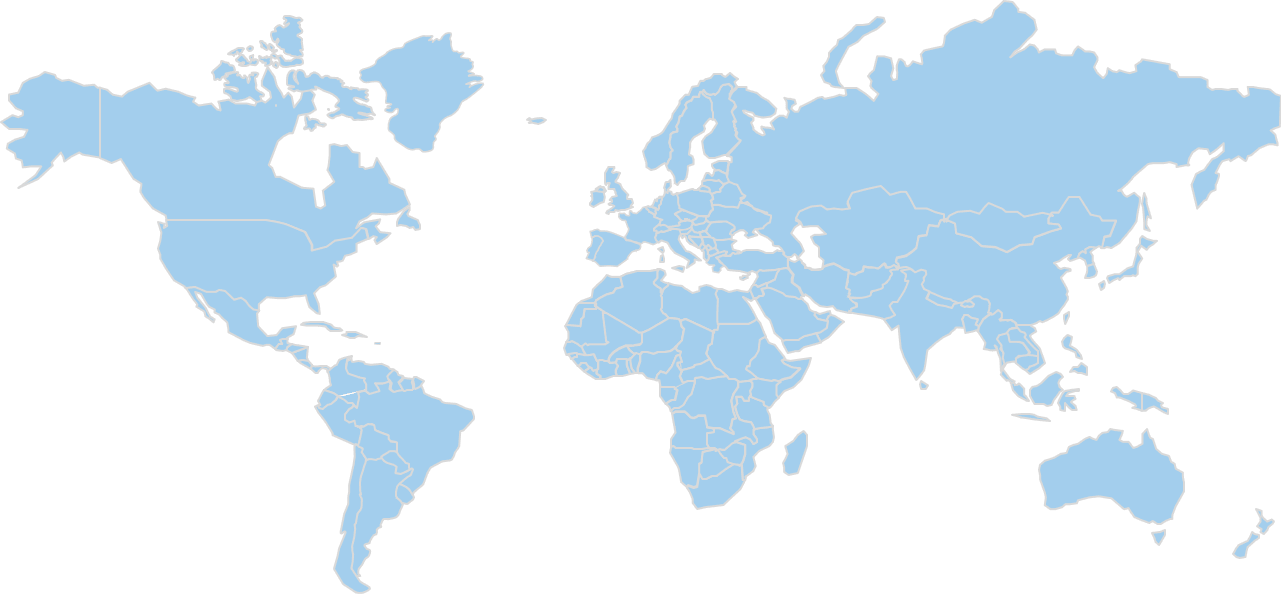
- 01By TypeAcacia Senegal · Acacia Seyal
- 02By FunctionThickener · Fat Replacer · Stabilizer
- 03By ApplicationConfectionery · Beverage Products · Bakery Products
- 04By FormPowder · Spray-Dried · Granules/Lumps
- 05By End-use IndustryFood & Beverage · Pharmaceuticals · Cosmetics & Personal Care
- 06By Region
Market Analysis & Outlook
Gum arabic is a natural, water-soluble exudate gum harvested from Acacia senegal and Acacia seyal trees, used across food, beverage, pharmaceutical, cosmetic and industrial formulations for its emulsifying, stabilizing, thickening and film-forming properties. It is supplied in raw lump, spray-dried powder, granulated and liquid solution forms to manufacturers ranging from large multinational food and beverage producers to specialty pharmaceutical and personal care formulators. Buyers select grade and form based on solubility, viscosity, clarity and regulatory acceptance requirements specific to their end application.
Growth of 5.72% a year carries the global gum arabic market from USD 950 million in 2025 to USD 1568 million in 2034. The full series behind that rate covers USD 680 million in 2020, USD 875 million in 2024, USD 1005 million in 2026 and USD 1256 million in 2030, with 2025 as the base year.
Composition changes more than the total does. Acacia Seyal, at 7.59%, outgrows Acacia Senegal at 5.13%, and its share moves from 22.1% to 26%. Acacia Senegal stays the largest line throughout, at USD 740.1 million in 2025 and USD 1160.3 million in 2034. Acacia Seyal take share over the period; Acacia Senegal give it up while still growing in absolute terms.
The function split puts Thickener first, at USD 266 million and 28% of revenue in 2025, rising to USD 407.7 million and 26% in 2034. Fat Replacer grows faster at 8.39% against 4.86%, moving from 12% of revenue to 15% by 2034. It cuts the same total as the type axis from a different commercial angle, so revenue does not add across the two.
The regional order runs from Europe at 34.2% of 2025 revenue down to Latin America at 6%. Europe is worth USD 324.8 million in 2025 and USD 486.1 million in 2034; North America, second at 25.9%, moves from USD 246.1 million to USD 376.3 million. Share shifts toward Asia Pacific over the forecast period, so the regional split repays a close reading.
The 2025 total is a triangulation of published figures and category proxies, short of a directly sourced total. Segment, regional and country splits are estimated on the same basis, which bounds the precision of the figures above. Coverage runs to five regions, two type lines and five segmentation axes across a fifteen-year window.
Market Size, 2020–2034
USD MillionRevenue in USD Million. Values up to 2025 are actuals; 2026–2034 are forecast.
Key Takeaways
- A forecast-period rate of 5.72% takes the market from USD 950 million in 2025 to USD 1568 million in 2034, against 6.91% recorded over the 2020-2025 historical period.
- Acacia Senegal is the largest type line at USD 740.1 million in 2025, a 77.9% share, reaching USD 1160.3 million and 74% of revenue by 2034.
- Fastest growth on the type axis belongs to Acacia Seyal: 7.59% a year, USD 209.9 million to USD 407.7 million, and a share moving from 22.1% to 26%.
- The bull case puts 2034 revenue at USD 1709.1 million and the bear case at USD 1426.9 million, either side of the USD 1568 million base case, each with its own stated assumption in the full report.
- The largest region is Europe, generating USD 324.8 million in 2025 (34.2% of the global total) and USD 486.1 million by 2034, ahead of North America at 25.9%.
- 40% of Europe's base-year revenue comes from France alone: USD 129.9 million in 2025, rising to USD 194.4 million by 2034, which is why it is that region's worked example.
- Fifteen years are reported, 2020 to 2034 with 2025 as the base: revenue, share and growth rate per line, per axis and per region, not as a single blended series.
Market Trends
Revenue Share, By By Type
Base year 2025Acacia Senegal leads with 77.9% of by type segment revenue.
Share of by type segment revenue, most recent base year.
Read across the forecast period, the global gum arabic market shows movement in three places: type composition, regional weight, and the 5.72% rate applied to the whole.
None of them reverses the market's direction. Every line and every region grows in absolute terms across the period; the movement is in which of them captures the revenue added.
Composition shifts on the type axis. Acacia Seyal grows at 7.59% across 2026-2034 against 5.13% for Acacia Senegal, the widest spread on the type axis. Over the forecast period that moves Acacia Seyal from 22.1% of revenue to 26%, and Acacia Senegal from 77.9% to 74%. In absolute terms Acacia Seyal rises from USD 209.9 million to USD 407.7 million, while Acacia Senegal rises from USD 740.1 million to USD 1160.3 million. Both grow; the gap is wide enough to reshape the mix inside a single forecast window.
Regional weight shifts toward Asia Pacific. Asia Pacific moves from 23.2% of revenue in 2025 to 29% in 2034, worth USD 220.4 million rising to USD 454.7 million. The remaining regions grow in absolute terms while giving up share: North America at 25.9% moving to 24%, Europe at 34.2% moving to 31%, Middle East and Africa at 10.7% moving to 10%, Latin America at 6% moving to 6%. That makes the regional split worth reading directly instead of scaling from the global rate: the same market rate produces different outcomes depending on where a supplier's revenue sits.
A continuation, not an inflection. Year by year the total runs USD 680 million in 2020, USD 875 million in 2024, USD 950 million in 2025, USD 1005 million in 2026, USD 1256 million in 2030 and USD 1568 million in 2034. The forecast rate of 5.72% sits against 6.91% over the historical period, so the projection extends an observed trend instead of proposing a new one. That moves the planning question away from timing a turn and onto the type and regional mixes, where the actual movement is.
Market Growth Factors
Acacia Seyal carries the market's growth rate
Market Drivers
3- 01Acacia Seyal carries the market's growth rate
The fastest line on the type axis is Acacia Seyal, at 7.59% against the market's 5.72%, taking USD 209.9 million to USD 407.7 million and 22.1% of revenue to 26%. The market's overall 5.72% depends on that rate holding: at the 5.13% recorded by Acacia Senegal, the same revenue base would compound to a materially smaller 2034 total. Exposure to this line, not to the market as a whole, is what determines a supplier's own rate.
- 02Regional weight, not regional count
Europe is the largest region at USD 324.8 million in 2025, 34.2% of global revenue, and reaches USD 486.1 million by 2034 while holding 31%. Behind it, North America holds 25.9%; USD 246.1 million rising to USD 376.3 million. Between them they hold most of the base and most of the revenue added over the period, so equal-weighting the regions in a plan misstates where the growth is.
- 03The base has grown every year since 2020
The historical period compounded at 6.91%; USD 680 million in 2020, USD 875 million in 2024 and USD 950 million in 2025. From there the forecast carries 5.72% through to USD 1568 million in 2034. Fifteen years of unbroken growth in the series means the forecast rests on a demonstrated trajectory, not a projected turnaround, and it is why the 5.72% rate is applied flat across the whole period instead of ramped through it.
Growth drivers
| # | Growth driver | Impact | Gross contribution (Million) | 2026-28 | 2029-31 | 2032-34 |
|---|---|---|---|---|---|---|
| 1 | Rising demand for clean-label and natural stabilizers in food and beverage manufacturing | High | +220 | High | High | Medium |
| 2 | Expansion of functional and fortified beverage categories requiring emulsification and cloud stabilization | Medium-High | +150 | Medium | High | High |
| 3 | Growth in pharmaceutical excipient applications for tablet coating and controlled release | Medium-High | +95 | Low | Medium | High |
| 4 | Diversification of Sudanese and Chadian gum arabic export supply reducing historical supply volatility | Medium | +70 | Medium | Medium | Low |
| 5 | Increasing cosmetics and personal care formulation use as a natural binder and film-former | Medium | +55 | Low | Medium | Medium |
| 6 | Others | Low | +123 | Low | Low | Low |
| Total | +713 | |||||
Restraints
| # | Restraint | Impact | Estimated reduction (Million) | 2026-28 | 2029-31 | 2032-34 |
|---|---|---|---|---|---|---|
| 1 | Price volatility tied to concentrated production in politically unstable source regions | Medium-High | −60 | High | Medium | Medium |
| 2 | Competition from synthetic and alternative hydrocolloid stabilizers in cost-sensitive applications | Medium | −35 | Medium | Medium | Medium |
| Total | −95 | |||||
Drivers contribute 713 Million and restraints remove 95 Million, a net 618 Million, which is the revenue the market adds between the base year and 2034. Contributions are CDI estimates, apportioned so that they reconcile with the forecast rather than being read from it.
The 5.72% forecast rate rests on three things that can be measured separately: the size of the existing base, the mix shift on the type axis, and where regional growth is concentrated.
Restraining Factors
What holds the forecast back
Market Restraints
2- 01What holds the forecast back
A bear case of USD 1426.9 million in 2034, against USD 1568 million in the base case, rests on one stated assumption: renewed export disruption from origin countries constrains available volume and synthetic hydrocolloid substitution advances faster than the base case in cost-sensitive industrial and food applications. Neither case changes the USD 950 million 2025 base.
- 02Acacia Senegal grows below the market rate
With 77.9% of 2025 revenue (USD 740.1 million) Acacia Senegal is where most of the market sits, and it grows at only 5.13% against the market's 5.72%. Revenue still reaches USD 1160.3 million by 2034 and share still falls to 74%: a drag on the average, not a decline.
Market Opportunities
Upside case: USD 1709.1 million by 2034
Market Opportunities
2- 01Upside case: USD 1709.1 million by 2034
The upside path assumes sudanese and Chadian export volumes expand smoothly and reformulation toward natural stabilizers accelerates faster than the base case across food, beverage and pharmaceutical applications. It ends 2034 at USD 1709.1 million against a USD 1568 million base case, off the same USD 950 million base year.
- 02Acacia Seyal is where share changes hands
Acacia Seyal grows at 7.59% against 5.72% for the market, adding revenue from USD 209.9 million in 2025 to USD 407.7 million in 2034 and taking its share from 22.1% to 26%. It is the place on this axis where share changes hands at scale, so it is where an entrant can take position without displacing the incumbent in Acacia Senegal.
Market Challenges
Concentration on the type axis
Market Challenges
2- 01Concentration on the type axis
Acacia Senegal is 77.9% of 2025 revenue at USD 740.1 million and still 74% at USD 1160.3 million in 2034. Anything that changes demand for it changes the headline number; nothing else on the axis carries that weight.
- 02Europe is largely France
France generates USD 129.9 million of Europe's USD 324.8 million in 2025, 40% of the region, reaching USD 194.4 million by 2034. The consequence is that regional risk here is really country risk wearing a larger label.
Segmentation Analysis
5 axesfive segmentation axes are reported; by type, by function, application, form and end-use industry. Each axis cuts the same total revenue along a different commercial dimension, so the splits are alternative views of one market, not additions to it.
All two type lines expand in revenue terms over the forecast period. Share is the dividing line; one takes it, the other cedes it.
By Type · 2 segments
Scale in Acacia Senegal and Growth in Acacia Seyal Define the Type Axis
- Largest Acacia Senegal · 77.9%
- Fastest Acacia Seyal · 7.6%
- Moves most Acacia Senegal · -3.9 pts
- Order by 2034 unchanged
| Segment | 2025 | Share | 2034 | Share | CAGR |
|---|---|---|---|---|---|
| Acacia Senegal | $740M | 77.9% | $1160M | 74%-3.9 | 5.1% |
| Acacia Seyal | $210M | 22.1% | $408M | 26%+3.9 | 7.6% |
Acacia Senegal leads because its superior solubility, low viscosity and clean flavor profile give it broad acceptance across food and pharmaceutical formulations with an established regulatory history. Acacia Seyal grows faster as diversified export supply from Sudan and Chad improves its availability and its lower cost draws increased adoption in industrial and lower-specification applications where price sensitivity outweighs functional performance requirements. The fastest line is Acacia Seyal, which is why the split shifts toward it over the period. Acacia Senegal remains the largest line through 2034, so the axis changes in proportion, not in order. This is the axis the estimation prices in full, year by year, and the one the regional chapters cut against.
By Function · 7 segments
By Function
- Largest Thickener · 28%
- Fastest Fat Replacer · 8.4%
- Moves most Fat Replacer · +3 pts
- Order by 2034 unchanged
| Segment | 2025 | Share | 2034 | Share | CAGR |
|---|---|---|---|---|---|
| Thickener | $266M | 28% | $408M | 26%-2 | 4.9% |
| Fat Replacer | $114M | 12% | $235M | 15%+3 | 8.4% |
| Stabilizer | $228M | 24% | $345M | 22%-2 | 4.7% |
| Gelling Agent | $133M | 14% | $251M | 16%+2 | 7.3% |
| Coating Agent | $95M | 10% | $141M | 9%-1 | 4.5% |
| Texturant | $76M | 8% | $125M | 8% | 5.7% |
| Others | $38M | 4% | $62.70M | 4% | 5.7% |
2025 to 2034 revenue and share by line: Thickener USD 266 million to USD 407.7 million (28% to 26%), Stabilizer USD 228 million to USD 345 million (24% to 22%), Gelling Agent USD 133 million to USD 250.9 million (14% to 16%), Fat Replacer USD 114 million to USD 235.2 million (12% to 15%), Coating Agent USD 95 million to USD 141.1 million (10% to 9%), Texturant USD 76 million to USD 125.4 million (8% to 8%), Others USD 38 million to USD 62.7 million (4% to 4%). Fat Replacer Outpaces the Axis While Thickener Holds the Largest Share Thickener and Stabilizer applications lead because they perform the core functional role of maintaining texture and preventing separation across confectionery and beverage formulations, a role built into formulation practice over decades. Fat Replacer use grows fastest as manufacturers reformulate toward reduced-fat and reduced-sugar products, and gum arabic's ability to mimic mouthfeel without added calories fits directly into that shift across bakery and dairy systems. The order does not change: Thickener is still largest in 2034, and what moves is how much it holds.
By Application · 6 segments
Scale in Confectionery and Growth in Dairy Products Define the Application Axis
- Largest Confectionery · 34%
- Fastest Dairy Products · 6.7%
- Moves most Confectionery · -3 pts
- Order by 2034 unchanged
| Segment | 2025 | Share | 2034 | Share | CAGR |
|---|---|---|---|---|---|
| Confectionery | $323M | 34% | $486M | 31%-3 | 4.7% |
| Beverage Products | $266M | 28% | $470M | 30%+2 | 6.5% |
| Bakery Products | $133M | 14% | $220M | 14% | 5.7% |
| Dairy Products | $114M | 12% | $204M | 13%+1 | 6.7% |
| Sauces & Dressings | $76M | 8% | $125M | 8% | 5.7% |
| Others | $38M | 4% | $62.70M | 4% | 5.7% |
Confectionery leads on the strength of decades-old reliance on gum arabic as a glazing and binding agent in sugar confectionery and gum-based candy production. Beverage Products grows fastest as clean-label emulsification and cloud-stabilization needs expand across functional and flavored drink categories, with manufacturers substituting gum arabic for synthetic emulsifiers to meet ingredient-label simplification goals. The order does not change: Confectionery is still largest in 2034, and what moves is how much it holds.
By Form · 4 segments
Scale in Powder and Growth in Liquid/Solution Define the Form Axis
- Largest Powder · 45%
- Fastest Liquid/Solution · 7.9%
- Moves most Powder · -3 pts
- Order by 2034 unchanged
| Segment | 2025 | Share | 2034 | Share | CAGR |
|---|---|---|---|---|---|
| Powder | $428M | 45% | $659M | 42%-3 | 4.9% |
| Spray-Dried | $285M | 30% | $517M | 33%+3 | 6.8% |
| Granules/Lumps | $143M | 15% | $204M | 13%-2 | 4.1% |
| Liquid/Solution | $95M | 10% | $188M | 12%+2 | 7.9% |
Powder remains the leading form because it is the most cost-effective format to transport, store and dose across confectionery and beverage manufacturing lines already built around powder-handling equipment. Liquid Solution grows fastest as beverage and dairy processors increasingly prefer a pre-dissolved format that removes an in-house dissolution step and reduces batch-to-batch viscosity variation in continuous processing lines. The order does not change: Powder is still largest in 2034, and what moves is how much it holds.
By End-use Industry · 4 segments
Food & Beverage Held the Dominant Share of the End-use industry Segment in 2025
- Largest Food & Beverage · 72%
- Fastest Pharmaceuticals · 7.3%
- Moves most Food & Beverage · -3 pts
- Order by 2034 unchanged
| Segment | 2025 | Share | 2034 | Share | CAGR |
|---|---|---|---|---|---|
| Food & Beverage | $684M | 72% | $1082M | 69%-3 | 5.2% |
| Pharmaceuticals | $133M | 14% | $251M | 16%+2 | 7.3% |
| Cosmetics & Personal Care | $85.50M | 9% | $157M | 10%+1 | 7% |
| Industrial & Other | $47.50M | 5% | $78.40M | 5% | 5.7% |
Food and Beverage leads because gum arabic's core functional roles in emulsification, stabilization and fiber fortification sit inside the categories with the highest processed-food penetration worldwide. Pharmaceuticals grows fastest as its use as a natural, well-tolerated tablet-coating and binding excipient expands alongside demand for plant-derived alternatives to synthetic polymer coatings in oral solid-dose manufacturing. Food & Beverage remains the largest line through 2034, so the axis changes in proportion, not in order.
Regional Insights
Regional Revenue Share
Base year 2025Share of global revenue in the base year.
Only the leading region's share is published outside the report; pins mark the region, not a specific country.
North America Market Analysis
The 2nd-largest region covered — 1.9 points of share move elsewhere by 2034.
- Rank 2 of 5
- 2025 share 25.9%
- By 2034 24%
- Revenue $246M → $376M
In North America, 25.9% of global revenue puts 2025 at USD 246.1 million with USD 376.3 million projected for 2034. It is a leading region on this axis, second by revenue throughout the period.
By 2034 the share stands at 24%, a shift in share, not in direction: revenue climbs every year while the market's centre of gravity moves elsewhere.
The type mix reported at global level applies here, with Acacia Senegal the largest line at 77.9% of 2025 revenue and Acacia Seyal the fastest-growing at 7.59%. Revenue for North America is broken out by every segmentation axis and by country in the full report.
United States
Sets the pace for North America at 82% of it, growing 1.5×.
- In region 1 of 2
- Of region 82%
- Of global 21.2%
- Revenue $202M → $305M
82% of North America's base-year revenue comes from the United States; USD 201.8 million, rising to USD 304.8 million by 2034. 82% of the region in 2025 means the regional figures are, in practice, a view of this market with others attached. Regional revenue of USD 246.1 million in 2025 and USD 376.3 million in 2034 sits around it, and it is the country used wherever the full report cuts a figure by geography.
the United States buys along the same lines as the market globally; Acacia Senegal first at 77.9% of 2025 revenue and 74% in 2034, Acacia Seyal fastest at 7.59% on a share moving from 22.1% to 26%. Since 82% of North America's revenue is generated here, the regional numbers inherit this market's mix instead of smoothing it out. Per-type revenue for the United States appears on its own in the full report.
Gum arabic sold into food, beverage, and supplement applications in the United States falls under the Food and Drug Administration's oversight as a food additive with Generally Recognized as Safe status when used within accepted food-manufacturing practice. A supplier must ensure the material meets the identity and purity specifications set out in the Food Chemicals Codex, and labelling on any packaged product containing it must comply with FDA rules on ingredient declaration under the Federal Food, Drug, and Cosmetic Act. Where gum arabic is used as a fiber source or encapsulating agent, the manufacturer must be able to document that the specific grade and manufacturing process fall within the accepted GRAS notification or affirmation covering that use. Import shipments are also subject to FDA's food facility registration and prior notice requirements before entry.
In the United States the field is GUM ARABIC, NEXIRA, KERRY, TIC GUMS, AGRIGUM INTERNATIONAL, FARBEST BRANDS, ARCHER DANIELS MIDLAND, ASHLAND, HAWKINS WATTS, PRODIGY NIG and others.. The commercially relevant division is 77.9% of 2025 revenue in Acacia Senegal, where the volume is, against 7.59% growth in Acacia Seyal, where share moves. Per-company positioning and share at country level are in the full report only.
Canada
2nd-largest in North America, growing 1.6×.
- In region 2 of 2
- Of region 18%
- Of global 4.7%
- Revenue $44.30M → $71.50M
Within North America, Canada accounts for 18% of regional revenue and 4.7% of the global total, worth USD 44.3 million in 2025 and USD 71.5 million by 2034.
Europe Market Analysis
The largest region covered — 3.2 points of share move elsewhere by 2034.
- Rank 1 of 5
- 2025 share 34.2%
- By 2034 31%
- Revenue $325M → $486M
In Europe, 34.2% of global revenue puts 2025 at USD 324.8 million with USD 486.1 million projected for 2034. That makes it the first-largest region covered, in 2025 and again in 2034.
31% of global revenue sits here in 2034, below the 2025 level, a shift in share, not in direction: revenue climbs every year while the market's centre of gravity moves elsewhere.
Segment composition follows the global pattern: Acacia Senegal largest at 77.9% of 2025 revenue, Acacia Seyal fastest at 7.59%. Per-axis and per-country detail for Europe sits in the full report.
France
The largest market in Europe, growing 1.5×.
- In region 1 of 3
- Of region 40%
- Of global 13.7%
- Revenue $130M → $194M
The largest single market in Europe is France, at USD 129.9 million in 2025 and USD 194.4 million in 2034. It accounts for 40% of regional revenue in the base year, the largest single share without dominating the region outright. Set against USD 324.8 million and USD 486.1 million for the region, it is why this market, and not a smaller one, is the one reported in full.
The type pattern in France is the global one: 77.9% of 2025 revenue in Acacia Senegal, 74% by 2034, against 7.59% growth in Acacia Seyal taking it from 22.1% to 26%. Since 40% of Europe's revenue is generated here, the regional numbers inherit this market's mix instead of smoothing it out. The full report reports France by type separately.
As a European Union member state, France applies the EU's harmonized food additive framework to gum arabic, which is listed as an approved thickening, stabilizing, and glazing agent subject to purity criteria set by European Commission regulations on food additive specifications. A supplier placing gum arabic on the French market must ensure the material carries the correct E-number designation on ingredient labels and that batch documentation demonstrates conformity with the purity criteria regulation. Where the product is intended for use in cosmetics or pharmaceutical excipients rather than food, it instead falls under the EU Cosmetics Regulation or pharmacopoeial monograph standards maintained by the European Pharmacopoeia. General EU food labelling rules on allergen and ingredient transparency also apply to any finished product incorporating it.
The suppliers tracked in this study (GUM ARABIC, NEXIRA, KERRY, TIC GUMS, AGRIGUM INTERNATIONAL, FARBEST BRANDS, ARCHER DANIELS MIDLAND, ASHLAND, HAWKINS WATTS, PRODIGY NIG and others.) compete in France across the type lines above. Acacia Senegal, at 77.9% of 2025 revenue, is where the volume sits, and Acacia Seyal, growing at 7.59%, is where position changes hands over the forecast period. The commercial size of that position is USD 324.8 million in 2025 and USD 486.1 million by 2034, 34.2% of the global total in the base year.
Germany
2nd-largest in Europe, growing 1.5×.
- In region 2 of 3
- Of region 24%
- Of global 8.2%
- Revenue $78M → $117M
Germany is sized at USD 78 million in 2025, rising to USD 116.7 million by 2034; 8.2% of global revenue and 24% of Europe. It is reported separately from France across every segmentation axis in the full report.
United Kingdom
3rd-largest in Europe, growing 1.5×.
- In region 3 of 3
- Of region 14%
- Of global 4.8%
- Revenue $45.50M → $68.10M
Within Europe, the United Kingdom accounts for 14% of regional revenue and 4.8% of the global total, worth USD 45.5 million in 2025 and USD 68.1 million by 2034.
Asia Pacific Market Analysis
The 3rd-largest region covered, and the one gaining the most — it picks up 5.8 points of share by 2034, while revenue still grows 2.1×.
- Rank 3 of 5
- 2025 share 23.2%
- By 2034 29%
- Revenue $220M → $455M
In Asia Pacific, 23.2% of global revenue puts 2025 at USD 220.4 million on the way to USD 454.7 million by 2034. By revenue it sits third across the study, and the ranking does not change between 2025 and 2034.
Its share rises to 29% over the forecast period, so the region grows faster than the market's 5.72% and takes a larger part of the revenue added by 2034 than its 2025 weight implies.
Within the region the type split tracks the global one; 77.9% of 2025 revenue in Acacia Senegal, fastest growth of 7.59% in Acacia Seyal. Per-axis and per-country detail for Asia Pacific sits in the full report.
China
The largest market in Asia Pacific, growing 2.1×.
- In region 1 of 2
- Of region 42%
- Of global 9.7%
- Revenue $92.60M → $191M
USD 92.6 million of Asia Pacific's 2025 revenue is generated in China, the region's largest market, reaching USD 191 million by 2034. 42% of the region in the base year makes it the largest market here without making it the region. Regional revenue of USD 220.4 million in 2025 and USD 454.7 million in 2034 sits around it, and it is the country used wherever the full report cuts a figure by geography.
Composition here matches the global split: the largest line is Acacia Senegal at 77.9% of 2025 revenue, easing to 74% by 2034, and the fastest is Acacia Seyal at 7.59%, from 22.1% to 26%. Its 42% weight in Asia Pacific means those movements carry straight into the regional totals. China carries its own type breakdown in the full report.
Gum arabic used in food products in China is regulated by the National Health Commission together with the State Administration for Market Regulation under the national food safety standard governing food additive use, which sets permitted applications, maximum usage levels, and purity requirements. A supplier must ensure the material is registered as an approved food additive under this standard and that its use aligns with the specific food categories for which approval has been granted. Imported gum arabic additionally requires customs clearance supported by health certificates and compliance documentation confirming conformity with Chinese national standards before it may enter domestic food manufacturing. Labelling on any finished food product containing the ingredient must follow the general rules for the labelling of prepackaged foods, identifying it by its standard additive name rather than a generic descriptor.
The suppliers tracked in this study (GUM ARABIC, NEXIRA, KERRY, TIC GUMS, AGRIGUM INTERNATIONAL, FARBEST BRANDS, ARCHER DANIELS MIDLAND, ASHLAND, HAWKINS WATTS, PRODIGY NIG and others.) compete in China across the type lines above. The commercially relevant division is 77.9% of 2025 revenue in Acacia Senegal, where the volume is, against 7.59% growth in Acacia Seyal, where share moves. The commercial size of that position is USD 220.4 million in 2025 and USD 454.7 million by 2034, 23.2% of the global total in the base year.
India
2nd-largest in Asia Pacific, growing 2.1×.
- In region 2 of 2
- Of region 28%
- Of global 6.5%
- Revenue $61.70M → $127M
India is sized at USD 61.7 million in 2025, rising to USD 127.3 million by 2034; 6.5% of global revenue and 28% of Asia Pacific. It is reported separately from China across every segmentation axis in the full report.
Middle East and Africa Market Analysis
The 4th-largest region covered — 0.7 points of share move elsewhere by 2034.
- Rank 4 of 5
- 2025 share 10.7%
- By 2034 10%
- Revenue $102M → $157M
In Middle East and Africa, 10.7% of global revenue puts 2025 at USD 101.7 million and reaches USD 156.8 million by 2034. Among the five regions it ranks fourth by revenue in both years.
Share settles at 10% in 2034, while nothing contracts here; other regions simply grow faster, which shows up as relative weight, not as falling revenue.
The type mix reported at global level applies here, with Acacia Senegal the largest line at 77.9% of 2025 revenue and Acacia Seyal the fastest-growing at 7.59%. Revenue for Middle East and Africa is broken out by every segmentation axis and by country in the full report.
Sudan
The largest market in Middle East and Africa, growing 1.5×.
- In region 1 of 3
- Of region 35%
- Of global 3.7%
- Revenue $35.60M → $54.90M
35% of Middle East and Africa's base-year revenue comes from Sudan; USD 35.6 million, rising to USD 54.9 million by 2034. Its 35% of base-year regional revenue leads the region, though enough sits elsewhere that Middle East and Africa is not a proxy for it. Against regional totals of USD 101.7 million in 2025 and USD 156.8 million in 2034, it is the country the full report breaks out in detail.
The type pattern in Sudan is the global one: 77.9% of 2025 revenue in Acacia Senegal, 74% by 2034, against 7.59% growth in Acacia Seyal taking it from 22.1% to 26%. Because the country carries 35% of Middle East and Africa, a movement in its own mix shows up in the regional totals instead of being averaged away by neighbouring markets. The full report reports Sudan by type separately.
Sudan is the world's principal source of raw gum arabic, and exports are overseen by the Sudanese Standards and Metrology Organisation together with the Gum Arabic Board, which sets grading and quality classifications distinguishing hashab from talha gum and other botanical sources. A supplier exporting from Sudan must classify shipments according to these established grade categories and provide phytosanitary and quality certification confirming the material meets the physical and compositional criteria expected by importing markets. Sudan's own domestic framework centers on grading and export certification. Exporters are also expected to document processing and handling practices that support conformity with the purity expectations of destination-country food or pharmaceutical additive rules, since downstream markets apply their own such standards to the material once it arrives.
The suppliers tracked in this study (GUM ARABIC, NEXIRA, KERRY, TIC GUMS, AGRIGUM INTERNATIONAL, FARBEST BRANDS, ARCHER DANIELS MIDLAND, ASHLAND, HAWKINS WATTS, PRODIGY NIG and others.) compete in Sudan across the type lines above. Volume sits in Acacia Senegal at 77.9% of 2025 revenue; movement sits in Acacia Seyal at 7.59% growth. The commercial size of that position is USD 101.7 million in 2025 and USD 156.8 million by 2034, 10.7% of the global total in the base year.
Nigeria
2nd-largest in Middle East and Africa, growing 1.5×.
- In region 2 of 3
- Of region 22%
- Of global 2.4%
- Revenue $22.40M → $34.50M
Within Middle East and Africa, Nigeria accounts for 22% of regional revenue and 2.4% of the global total, worth USD 22.4 million in 2025 and USD 34.5 million by 2034.
South Africa
3rd-largest in Middle East and Africa, growing 1.5×.
- In region 3 of 3
- Of region 15%
- Of global 1.6%
- Revenue $15.30M → $23.50M
1.6% of global revenue is generated in South Africa; USD 15.3 million in 2025, reaching USD 23.5 million in 2034, and 15% of Middle East and Africa.
Latin America Market Analysis
The 5th-largest region covered, holding its share flat through 2034, while revenue still grows 1.7×.
- Rank 5 of 5
- 2025 share 6%
- By 2034 6%
- Revenue $57M → $94.10M
6% of the global gum arabic market sits in Latin America in 2025, worth USD 57 million rising to USD 94.1 million in 2034. That makes it the fifth-largest region covered, in 2025 and again in 2034.
Its share moves to 6% by 2034, and the region keeps growing in absolute terms while others expand faster, a change in relative weight, not a decline in demand.
Acacia Senegal leads here as it does globally, at 77.9% of 2025 revenue, and Acacia Seyal again grows fastest at 7.59%. Latin America is reported axis by axis and country by country in the full study.
Brazil
The largest market in Latin America, growing 1.7×.
- In region 1 of 2
- Of region 50%
- Of global 3%
- Revenue $28.50M → $47.10M
The largest single market in Latin America is Brazil, at USD 28.5 million in 2025 and USD 47.1 million in 2034. It accounts for 50% of regional revenue in the base year, the largest single share without dominating the region outright. Against regional totals of USD 57 million in 2025 and USD 94.1 million in 2034, it is the country the full report breaks out in detail.
The type pattern in Brazil is the global one: 77.9% of 2025 revenue in Acacia Senegal, 74% by 2034, against 7.59% growth in Acacia Seyal taking it from 22.1% to 26%. With 50% of Latin America concentrated here, a change in this country's mix is visible in the regional figures instead of being diluted by its neighbours. The full report reports Brazil by type separately.
In Brazil, gum arabic used in food products is regulated by the National Health Surveillance Agency, which maintains the list of approved food additives and the technical standards governing their permitted uses, purity, and identity specifications. A supplier must ensure the material is registered as an authorized additive for the intended food category and that accompanying technical documentation demonstrates conformity with the agency's compositional criteria. Finished products containing gum arabic must carry labelling that identifies the ingredient by its standard additive designation and complies with Brazil's general food labelling rules on ingredient disclosure. Pharmaceutical or cosmetic formulation instead falls under the same agency's separate rules governing those product categories, which apply their own registration and quality-conformity requirements.
Competition in Brazil runs between the suppliers this study tracks: GUM ARABIC, NEXIRA, KERRY, TIC GUMS, AGRIGUM INTERNATIONAL, FARBEST BRANDS, ARCHER DANIELS MIDLAND, ASHLAND, HAWKINS WATTS, PRODIGY NIG and others.. Acacia Senegal, at 77.9% of 2025 revenue, is where the volume sits, and Acacia Seyal, growing at 7.59%, is where position changes hands over the forecast period. Weighting toward Latin America means competing for 6% of 2025 global revenue, a base of USD 57 million moving to USD 94.1 million across the forecast period.
Mexico
2nd-largest in Latin America, growing 1.6×.
- In region 2 of 2
- Of region 30%
- Of global 1.8%
- Revenue $17.10M → $28.20M
Mexico is sized at USD 17.1 million in 2025, rising to USD 28.2 million by 2034; 1.8% of global revenue and 30% of Latin America. It is reported separately from Brazil across every segmentation axis in the full report.
Request this sample to see the full data tables and segment-level detail behind this analysis.
Report Coverage
This report assesses the market across every segment, with revenue and a growth rate for each line in each year of the study period. It covers the drivers, trends, opportunities, restraints and challenges shaping growth, the competitive landscape and the companies profiled, and the research methodology behind every estimate. Segmentation is reported by Type, Function, Application, Form, End-Use Industry, and regional analysis covers North America, Europe, Asia Pacific, Middle East and Africa, Latin America, each broken out by country.
Competitive Landscape
Position on the Type Axis Decides Competitive Standing
Eleven suppliers are covered: GUM ARABIC, NEXIRA, KERRY, TIC GUMS, AGRIGUM INTERNATIONAL, FARBEST BRANDS, ARCHER DANIELS MIDLAND, ASHLAND, HAWKINS WATTS, PRODIGY NIG and others..
The competitive line that matters is the type one, not the geographic one. Volume sits in Acacia Senegal, USD 740.1 million and 77.9% of 2025 revenue, 74% by 2034, which is also where an incumbent is hardest to dislodge. Share moves in Acacia Seyal, growing 7.59% against 5.13% for Acacia Senegal. A supplier positioned in one is not automatically positioned in the other, so a field of this size stays viable in a market of USD 950 million.
Sourcing security separates the leaders from the rest: companies with direct, long-standing relationships with Sudanese and Chadian harvesters and exporters maintain steadier supply through disrupted seasons than those buying on the open export market. Processing scale, spray-drying and purification capacity, and the breadth of food-safety and pharmacopeia certifications held (kosher, halal, organic, multiple pharmacopeia grades) determine which suppliers can serve large multinational food, beverage and pharmaceutical accounts directly. Smaller and regional players compete instead on price, origin proximity and customized blending, while formulation and technical application support increasingly determines which supplier a manufacturer keeps once basic quality and reliability are already met.
Geographic reach is the other axis of competition. Europe alone accounts for 34.2% of 2025 revenue, so a supplier absent there is absent from the largest part of the market whatever its position elsewhere; North America adds a further 25.9%.
Company-level profiles, financials, shares and development histories are held in the full report and not in this summary.
List of Key Gum Arabic Market Companies Profiled
11 companies profiled. Company profiles, including financials, product portfolios and recent developments, are part of the full report.
- GUM ARABIC
- NEXIRA
- KERRY
- TIC GUMS
- AGRIGUM INTERNATIONAL
- FARBEST BRANDS
- ARCHER DANIELS MIDLAND
- ASHLAND
- HAWKINS WATTS
- PRODIGY NIG
- others.
Geographic Coverage
Every market below is broken out separately in the report.
North America
3Europe
8Asia Pacific
12Middle East and Africa
4Latin America
3Key Insights
Report Scope
Study parameters & segmentationThis study covers market size and forecasts over the 2020–2034 period, segmentation across 5 axes (Type, Function, Application, Form, End-use Industry), regional analysis for 5 regions and their constituent countries, a competitive landscape profiling 11 key companies, and the research methodology behind every estimate.
Segmentation
5 axes + regionFull chapter-and-section structure of the report. Segment, region, and company breakdowns are listed as scope. The underlying figures are in the sample and full report.
Table of Contents+−
Chapter 1.Executive Summary
Chapter 2.Premium Insights
Chapter 3.Market Definition
Chapter 4.Research Methodology
Chapter 5.Strategic Imperatives & Market Outlook
Chapter 6.Go-to-Market (GTM) Strategies
Chapter 7.Market Trends, Strategy & Dynamics
Chapter 8.Porter's Five Forces
Chapter 9.PESTEL Analysis
Chapter 10.Value Chain Analysis
Chapter 11.Supply Chain Analysis
Chapter 12.Macro-Economic Factors
Chapter 13.Market Cost Analysis
Chapter 14.Market Supply-Side Analysis
Chapter 15.Global Gum Arabic Market Size & Projections, 2020–2034, Revenue (USD Million)
Chapter 16.Global Gum Arabic Market Overview, By Type, 2020–2034, Revenue (USD Million)
Chapter 17.Global Gum Arabic Market Overview, By Function, 2020–2034, Revenue (USD Million)
Chapter 18.Global Gum Arabic Market Overview, By Application, 2020–2034, Revenue (USD Million)
Chapter 19.Global Gum Arabic Market Overview, By Form, 2020–2034, Revenue (USD Million)
Chapter 20.Global Gum Arabic Market Overview, By End-use Industry, 2020–2034, Revenue (USD Million)
Chapter 21.Global Gum Arabic Market Size — Segment Comparison
Chapter 22.Global Gum Arabic Geography Overview, 2020–2034, Revenue (USD Million)
Chapter 23.North America Gum Arabic Market Deep-Dive, 2020–2034, Revenue (USD Million)
Chapter 24.Europe Gum Arabic Market Deep-Dive, 2020–2034, Revenue (USD Million)
Chapter 25.Asia Pacific Gum Arabic Market Deep-Dive, 2020–2034, Revenue (USD Million)
Chapter 26.Middle East and Africa Gum Arabic Market Deep-Dive, 2020–2034, Revenue (USD Million)
Chapter 27.Latin America Gum Arabic Market Deep-Dive, 2020–2034, Revenue (USD Million)
Chapter 28.Application / Use-Case Analysis
Chapter 29.Vendor Capability Scorecard
Chapter 30.Scenario Forecasts
Chapter 31.Top 10 Key Clients of Top 10 Players
Chapter 32.Top 10 Suppliers
Chapter 33.Competitive Landscape
Chapter 34.Partnerships & M&A
Chapter 35.Key Vendor Analysis
Chapter 36.Marketing Strategy Analysis, Distributors & Traders
Chapter 37.Outlook of the Market
Chapter 38.Concluding Analyst Note
List of Figures+−
Structural index generated from this report's own section headings, not verified against the delivered report's actual figure numbering.
List of Tables+−
Structural index generated from this report's own section headings, not verified against the delivered report's actual table numbering.
Segmentation Analysis
5 axesBy Type
2- 01Acacia Senegal
- 02Acacia Seyal
By Function
7- 01Thickener
- 02Fat Replacer
- 03Stabilizer
- 04Gelling Agent
- 05Coating Agent
- 06Texturant
- 07Others
By Application
6- 01Confectionery
- 02Beverage Products
- 03Bakery Products
- 04Dairy Products
- 05Sauces & Dressings
- 06Others
By Form
4- 01Powder
- 02Spray-Dried
- 03Granules/Lumps
- 04Liquid/Solution
By End-use Industry
4- 01Food & Beverage
- 02Pharmaceuticals
- 03Cosmetics & Personal Care
- 04Industrial & Other
Segment categories shown for scope reference. See the Summary tab for revenue share by By Type. Full segment-by-segment detail across every axis is available in the sample and full report.
Research approach
A market size is a claim about the world, and a claim is only as good as the route to it. Every study is built upward from units and prices — what is actually produced, sold or performed, at what it actually changes hands for — rather than from a headline figure divided downwards. Disclosed company revenue is then used to check that build, not to produce it.
The estimate is built bottom-up from Sudanese, Chadian and Nigerian raw gum export volumes combined with processor purification and spray-drying throughput, multiplied by realized landed prices by grade, Acacia Senegal against Acacia Seyal, and by form, raw lump, spray-dried powder and liquid solution, across food, pharmaceutical and industrial end uses. This unit-times-price build is checked against disclosed and estimated revenue for processors including Nexira, Alland and Robert, TIC Gums and Kerry, drawn from company filings, trade association export data and customs declarations. Where the bottom-up total diverged from processor-disclosed revenue, for example in years with reported Sudanese export disruption, the volume or price assumption for the affected grade was revised rather than the estimate itself.
The four stages
The same sequence runs behind every published study, whatever the industry. The order matters as much as the steps: the segment axes are fixed before any number is collected, so the model is never reshaped to fit whatever data happens to turn up.
What the build rests on, and what checks it
The two are not interchangeable. The left column produces the number; the right column tests it. When the check disagrees with the build, the answer is to find which bottom-up assumption is wrong — a unit count, a price, a take-up rate — not to split the difference between them.
- Volume actually transacted — units produced, installed, dispensed or procedures performed, counted at the level each is genuinely recorded
- Realised pricing by tier and channel, rather than one blended average applied across the whole market
- Take-up and frequency: how much of the addressable base buys, and how often it repeats
- Disclosed revenue of the companies serving the market, where filings separate it far enough to be usable
- Buyer-side spending totals — capital budgets, procurement lines, or the output of the end market the product is bought against
- Trade and customs flows, where the product crosses borders in a separately recorded form
Data sources
Published data establishes what happened. Only the people transacting in a market can say why, and what is about to change — so the two are collected separately and weighted differently.
- Commercial and product leadership at the companies that supply the market
- Procurement and specification leads at the organisations that buy it
- Distributors, integrators and channel partners, where the market is served indirectly
- Regulatory and standards specialists, where approval governs what can be sold at all
- Company filings, annual reports and investor disclosure
- Government statistics, customs records and regulatory registers
- Trade association output and standards-body publications
- Technical and peer-reviewed literature, where the market rests on a clinical or engineering claim
Interviews target procurement and formulation R&D leads at food, beverage and pharmaceutical manufacturers, along with commercial and trading-desk contacts at gum arabic processors and origin-country exporters, and regulatory affairs staff tracking food-additive and pharmacopeia approvals. Sampling weights processing and trading contacts based in France and the United Kingdom, the principal processing and re-export hubs for gum arabic, alongside buyer-side contacts in North America and Western Europe where formulation demand concentrates. Origin-side contacts in Sudan, Chad and Nigeria are included separately to speak directly to harvest volumes, export flow and the pricing dynamics that only exporters and traders observe firsthand.
Desk research draws on Sudanese and Chadian gum arabic export statistics compiled by national trade ministries and by the Common Fund for Commodities' gum arabic monitoring programs, UN Comtrade records filed under the harmonized system code covering natural gums and resins, FAO and JECFA food-additive specification documentation setting permitted use levels, United States FDA GRAS notifications, the European Union's E414 food additive register, and sustainability and sourcing disclosures published directly by processors including Nexira and Alland and Robert, together with export-permit and quality-grading records maintained by Sudan's Gum Arabic Company documenting annual harvest classification by grade.
Desk research runs across proprietary research databases including Factiva, OneSource and Hoovers alongside the public sources above. Modelling and statistical validation are run in SAS and SPSS.
Forecasting
The forecast is not a growth rate applied to a base year. It is built from the drivers that are expected to change, each one stated so a reader can disagree with it.
The forecast carries forward the continuing shift toward spray-dried and liquid formats, ongoing reformulation toward reduced-fat and reduced-sugar products that lean on gum arabic's fat-mimicking functionality, and gradual diversification of Sudanese Acacia Seyal export volume that has historically constrained available supply. Pricing is assumed to normalize gradually from the elevated levels recorded during recent Sudanese harvest disruptions instead of remaining at peak levels through the period. The forecast holds only if origin-country export policy stays broadly open and no substitute hydrocolloid achieves comparable emulsification performance at materially lower cost within the study period.
Triangulation and validation
No figure enters a report on the strength of one source. Where the two sizing routes disagree the difference is not averaged away — the assumption causing it is isolated, tested against a third independent measure, and either corrected or carried forward as a stated limitation. Historical years are back-tested against the growth actually recorded before any forecast is allowed to run forward from them.
Outputs were back-tested against recorded 2020-2024 export volume and price growth from Sudanese and Chadian trade data to confirm the bottom-up build reproduces realized trend direction and magnitude across the historical period. Segment-level shifts, including the move toward spray-dried and liquid forms and toward pharmaceutical end use, were reviewed against processor and buyer commentary gathered in the primary research rather than assumed from the trend alone. Sensitivities were run against a scenario of renewed Sudanese export disruption and against faster synthetic-hydrocolloid substitution in cost-sensitive industrial applications, with both reflected directly in the bear case built into the forecast.
Confidence and limitations
Where an estimate is firm and where it is not is stated rather than left to be inferred from the precision of the number.
The food and beverage application data and the Acacia Senegal versus Seyal split rest on the most consistent trade and processor disclosure available and form the firmest part of this estimate. Pharmaceutical and cosmetics end-use figures are triangulated from adjacent hydrocolloid-excipient analogues and carry wider uncertainty, since few processors break out revenue by end industry at that level of detail. The structural risk most likely to force a revision is a sustained disruption to Sudanese export flow, which has historically moved both price and available volume within a single harvest season.
Every report purchase includes direct access to the lead analyst for scoping questions on the data, at no extra cost and with no separate booking process.
Request a tailored breakdown by geography, segment, or competitor set beyond what's in the standard report.
Questions This Report Answers
6 questionsWhat is the market size and growth rate, globally and by region?
How is the market segmented, and which segments lead?
Which regions and countries are covered, and how do they compare?
What are the key drivers, restraints, opportunities and challenges?
Who are the leading companies operating in this market?
What trends are expected to shape the market through the forecast period?
Frequently Asked Questions
01What is the Gum Arabic Market projected to reach?
USD 1568 Million by 2034, CAGR 5.72%
02What years does this report cover?
Study period 2020–2034, base year 2025, historical data 2020-2024, forecast period 2026-2034.
03Which regions are covered?
North America, Europe, Asia Pacific, Middle East and Africa, Latin America.
04Which region accounted for the largest market share?
Europe leads with 34.2% of global revenue through 2034.
05Which segment leads the market?
Acacia Senegal is the largest line by Type, at 77.9% of revenue in 2025.
06Who are the key companies profiled?
GUM ARABIC, NEXIRA, KERRY, TIC GUMS, AGRIGUM INTERNATIONAL, FARBEST BRANDS, ARCHER DANIELS MIDLAND, ASHLAND, HAWKINS WATTS, PRODIGY NIG, others.. Full profiles are part of the paid report.
07Can the segmentation be customized?
Yes. Custom data cuts by geography, segment, or competitor set are available on request.
Why choose CDI
Need this report shaped around your question?
The scope isn't fixed. Tell us what your team needs that the standard edition doesn't cover, and an analyst will come back on what can be adjusted and how long it takes, before you commit to anything.
Most licences include 30–60 hours of customization at no extra cost. See what each licence includes
Additional Companies
Add competitors, suppliers or the peer set you benchmark against to the companies already covered.
Deeper Competitive View
Sharpen the landscape work around your own position: product line, channel, or a named shortlist of rivals.
Extra Segment Splits
Break the market down along an axis the standard scope doesn't cut it by, or go a level deeper inside one.
Application Focus
Narrow the analysis to the specific use cases and end users your team actually sells into.
Different Time Frame
Move the base year, or widen the historical and forecast windows the study is built on.
Country-Level Detail
Go below region level into the individual countries that matter to you, rather than the standard geography split.